



















Join thousands of book lovers
Sign up to our newsletter and receive discounts and inspiration for your next reading experience.
By signing up, you agree to our Privacy Policy.You can, at any time, unsubscribe from our newsletters.

This book offers an in-depth examination of multi-capital accounting, the accounting of the future, which has already been integrated within the Corporate Sustainability Reporting Directive and will follow on from sustainability reporting.
The book will appeal to scholars and students alike interested in identity formation and expression in the Byzantine provinces, as well as those researching the social history of the poor in Byzantium, and the mechanisms of hierarchies, social marginalisation, and oppression.
Thoroughly updated with a new chapter and extensive use of case studies to showcase examples of sustainable practices, this edition discusses many activities that are generating geoenvironmental impacts that are averse to the quality and health of the geoenvironment. It also includes new tools and procedures to evaluate adverse impacts.
With an introduction by Sir Roy Goode, this book presents perspectives on legal issues of international sales transactions as perceived by world leading experts, exposing pragmatic and modern aspects of everything from drafting, to uniform laws, to dispute resolution.
This book studies the commercial activities in the eighteenth and nineteenth centuries in and around Assam.
Cities in South Asia are homes to one of the highest concentrations of people anywhere in the world and the allocation of land and urban resources in this region have become increasingly contested. This volume explores the politics of urban land in South Asia and the challenges related to their respective urban futures.
This book is the first to provide a general theory of self-destruction in complex systems. The volume suggests a unified theory of systemic self-destruction applicable to natural, social and cultural phenomena.
"Stay away from real estate sales, Mike, just keep doing what you're doing." These were words Mike Allen's father spoke to him near the start of his corporate career. For years, Mike listened to his dad's advice and instead of following in his father's footsteps, he climbed the corporate ladder and at 33, he became the youngest director in his company's history. Life was good. But then one day, everything changed. While vacationing with his extended family in California, Mike's dad suddenly passed away-leaving Mike personally devastated and unsure of how to move forward. Without intervention, his dad's real estate business, which had taken years to develop, would fall apart. Living in Greenville, South Carolina, at the time, Mike made the tough decision to move across the country to Porterville, California, and step into a space he'd always heard about but never knew. Arriving soon before the 2008 financial crisis, Allen quickly discovered real estate wasn't for the faint of heart. But it was this struggle that forced him to grow. He realized that if he were to have any shot at success, he needed to reshape his thinking. This led him to develop the principles that form the foundation for this book, The Quantum Real Estate Agent. In this book, Allen shares ten quantum abilities that can serve as the blueprint for any real estate agent's success. These principles have formed the foundation for his life and are the reason he has had tremendous success as the president and co-owner of Quantum Realty Group, Inc. These include principles such as thinking beyond what most people consider attainable, becoming addicted to self-improvement, out-hustling the competition, preparing meticulously, and leading others the way you would want to be led. Ideal for aspiring and seasoned real estate professionals alike, The Quantum Real Estate Agent inspires readers to harness their past experiences and insights to build a successful and enriching career in real estate. Allen's motivational insights encourage readers to think big and act boldly, transforming both their professional careers and personal lives. This book serves as a roadmap to personal and professional transformation, urging readers to achieve greatness in the real estate industry through persistence, strategic planning, and a profound commitment to their core values.
A Financial Theory of the Business Cycle presents a new approach to business cycle theory based on the net present value. The book develops a novel diagrammatic approach to illustrate how fractional reserve banking systematically distorts net-present-value calculations.
The essays in this collection expand the definition of catastrophe to include not only events like pandemics, hurricanes, and wildfires but also slower-moving phenomena that have equally disastrous long-term consequences—like environmental degradation and structural racism. This book is a feminist intervention that challenges the binary between public and private, personal and political.
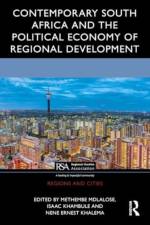
This book contextualises issues relating to trends in global discourses on development such as globalization and regionalisation, which are significant for South Africa, and indeed, for the study of the political economy of regional development in the country from the prism of South Africa as a global capitalist state.
Learn QuickBooks(R) Online--The smart way Small business owners turn to QuickBooks accounting software because it's comprehensive and easy to use. QuickBooks(R) Online For Dummies shows you how to get started with the cloud-based version, so you can access your info from any device. Even if you're new to accounting, this easy-to-understand guide will help you record receipts, process payroll, track inventory, run reports, and manage your business's money. This updated edition covers the latest changes to the platform, including new reporting capabilties for all users and the low-cost QuickBooks Ledger tier for accountants. Inside... Contrasting subscription tiers Setting up your company Generating invoices and checks Synchronizing with banks Managing books for clients Creating reports and budgets Utilizing apps and automation Crafting common journal entries
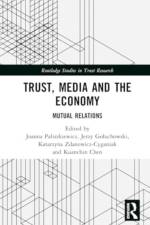
Trust, Media, and the Economy: Mutual Relations delves into the critical relationships between trust, media, and economic behavior. This book explores how trust in media influences economic decisions and how economic conditions impact media trustworthiness.
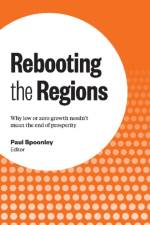
Loss of jobs, loss of young people, the ageing demographic, the apparently irresistible magnet of Auckland . . . the economic fortunes of New Zealand's regions are of great concern to politicians, the business community, schools, employers -- and indeed most citizens. What is the dynamic at work here? Is there a remedy? Is there a silver lining? What works? What doesn't? What are the smart regions doing that shows promise? This collection of expert articles addresses the issues facing our regions and investigates the reasons for population loss. Often those solutions involve facing up to the fact that decline is inevitable and unavoidable -- and then coming up with smart new plans and policies that accept that the end of growth does not have to mean the end of prosperity.
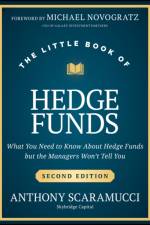
Praise for THE LITTLE BOOK OF HEDGE FUNDS "This Little Book does a great job providing an insider's perspective on the hedge fund industry and why they will always be an important part of a well-diversified portfolio." --LEE COOPERMAN, Chairman and CEO of Omega Family Office, former General Partner, Goldman Sachs "In the second edition of The Little Book of Hedge Funds, Scaramucci demystifies the complexities of hedge funds with the wit and insight of an investment veteran, making an otherwise opaque world both accessible and engaging. Sharp, informative, and incredibly entertaining." --JOE DOWLING, Senior Managing Director and the Global Head of Blackstone Multi-Asset Investing (BXMA)
The "e;bricks and mortar"e; issues of facility management - HVAC, lighting, electrical, plumbing, space allocation, security and grounds maintenance - continue to be at the core the facility manager's role. However, the processes involved in addressing these areas have become more complex. The proliferation of regulatory mandates, worker compensation issues, increased employee litigation, and violence in the workplace have redefined the role of the facility manager beyond "e;gatekeeper"e; to that of full-scale operations manager. Today's corporations, organizations, and business partnerships invest heavily in their physical plants. It naturally follows that they expect to maximize the return on their investment. Facility managers are seen as the catalysts for ensuring that optimal return.The Facility Manager's Handbook addresses all of these issues, and provides a multitude of tested ideas, procedures and examples for successfully and cost-effectively managing facility operations. Written in a plain-language, reader-friendly style, it provides a panoramic view of the process by isolating the key areas the facility manager must address, including real estate, space and change management, indoor air quality, emergency preparedness and response planning, communications systems, regulatory mandates and more.
This book was written to give energy-involved professionals the tools they need to take their energy audits to the next level, and use them to accurately predict a building's future energy use and true savings potential. Going beyond the conventional energy audit, which can lead to projections which are frequently off by as much as 20%, this book provides detailed guidelines on how to use the new tool, the investment grade audit (IGA), which enables prediction of savings with much greater accuracy. Building on the traditional audit, the IGA requires the addition of a "e;risk assessment component"e; which evaluates conditions in a specific building and/or process and reduces the level of uncertainty as to how proposed energy efficiency measures will really behave over time. The authors have covered every aspect of the IGA, including risk management, the "e;people"e; factor, measurement and verification, financing issues, report presentation guidelines, and master planning strategies.
Natural gas purchasing is generally deregulated on a federal or interstate basis. However, intrastate, there are many conditions that come into play which typically translate into higher costs for the commercial or industrial user. This book is intended to serve as comprehensive reference which can be used by the natural gas purchaser to sort out both the potential pitfalls that can negatively impact gas costs, and the opportunities for significant savings available to the informed user. Each step in the process of natural gas production and delivery to the marketplace is thoroughly examined, including production, inter/intrastate transportation, regulation, cost factors, local distribution, company structures, and deregulation processes. Also fully covered is the natural gas LDC billing process, and how understanding it can lead to significant savings.
Sign up to our newsletter and receive discounts and inspiration for your next reading experience.
By signing up, you agree to our Privacy Policy.